Why the Estadio Azteca Is Football's Most Iconic Stadium | CobbleRose
Pelé conquered it in 1970. Maradona broke English hearts there in 1986. Now England return to the Estadio Azteca for the first time in forty years. Why one ground on a bed of volcanic rock became football's most mythical stadium.
1970: the tournament that made the Azteca sacred
Every sport has its cathedral. Cricket has Lord's. Tennis has Centre Court. Football has the Estadio Azteca. On Sunday evening in Mexico City, one o'clock on Monday morning back home, England walk into it for a World Cup last sixteen tie against the hosts. No English side has played there since 1986. You will know why that date matters. Everyone does.
But the Azteca was mythical long before Diego Maradona jumped with Peter Shilton, and its story starts centuries before a ball was ever kicked there.
A name carved from an ancient civilisation
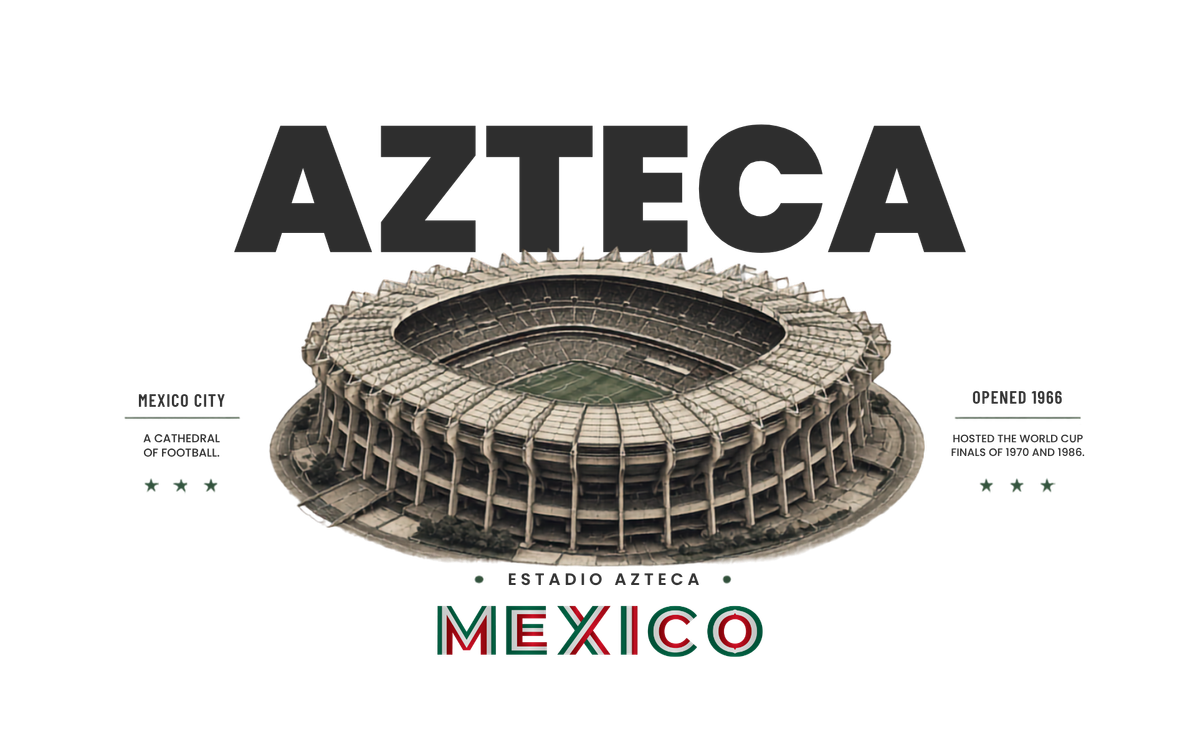
Mexico City is built on the ruins of Tenochtitlan, the island capital of the Aztec Empire. When the stadium opened in May 1966, its architect Pedro Ramírez Vázquez named it in honour of that heritage. The ground itself is carved into a bed of volcanic rock in the south of the city, sitting 2,240 metres above sea level, thin air that has broken the lungs and hearts of visiting teams for sixty years.
The name runs deeper than tribute. The Aztecs played ōllamaliztli, a ritual ball game contested on stone courts called tlachtli, where the outcome was believed to carry the favour of the gods. A game of a ball, a walled arena, and stakes beyond sport. The Azteca did not invent that idea. It inherited it.
Sponsorship deals mean the ground now carries the name Estadio Banorte, and FIFA calls it Mexico City Stadium for this tournament. Nobody uses either. Some names cannot be bought.
1970: The World Cup tournament that made the Azteca sacred
The 1970 World Cup was the first broadcast in colour, and the Azteca gave television its first great football paintings. Brazil in gold, Pelé rising above the green.
The semi final between Italy and West Germany finished 4 3 after extra time, five goals arriving in the added half hour, and is still known simply as the Game of the Century. A plaque outside the stadium commemorates it. Then came the final. Brazil beat Italy 4- 1, Carlos Alberto thundered in the fourth after the most famous team move ever constructed, and Pelé lifted the Jules Rimet trophy for a third time.
One tournament. One stadium. Two matches that sit permanently in football's highlight reel.
1986: four minutes that changed football forever
Sixteen years later the Azteca did it again, and this time England were the supporting cast.
The quarter final of 22 June 1986. Maradona punched Argentina ahead, the Hand of God, then four minutes later collected the ball inside his own half and slalomed past half of Bobby Robson's side to score what FIFA later voted the Goal of the Century. The worst goal ever conceded by England and the greatest goal ever scored against them, four minutes apart, in the same afternoon, in the same ground.
Maradona lifted the trophy there days later, and the Azteca became the only stadium on earth to have hosted two World Cup finals. This summer it became the first to stage matches at three World Cups. No other ground comes close to that catalogue.
England and the Azteca: unfinished business
England's record in the stadium is thin and haunted. A goalless draw with Mexico in 1969. A defeat there in 1985. A 3 0 win over Paraguay in the last sixteen of 1986, followed immediately by the Maradona game.
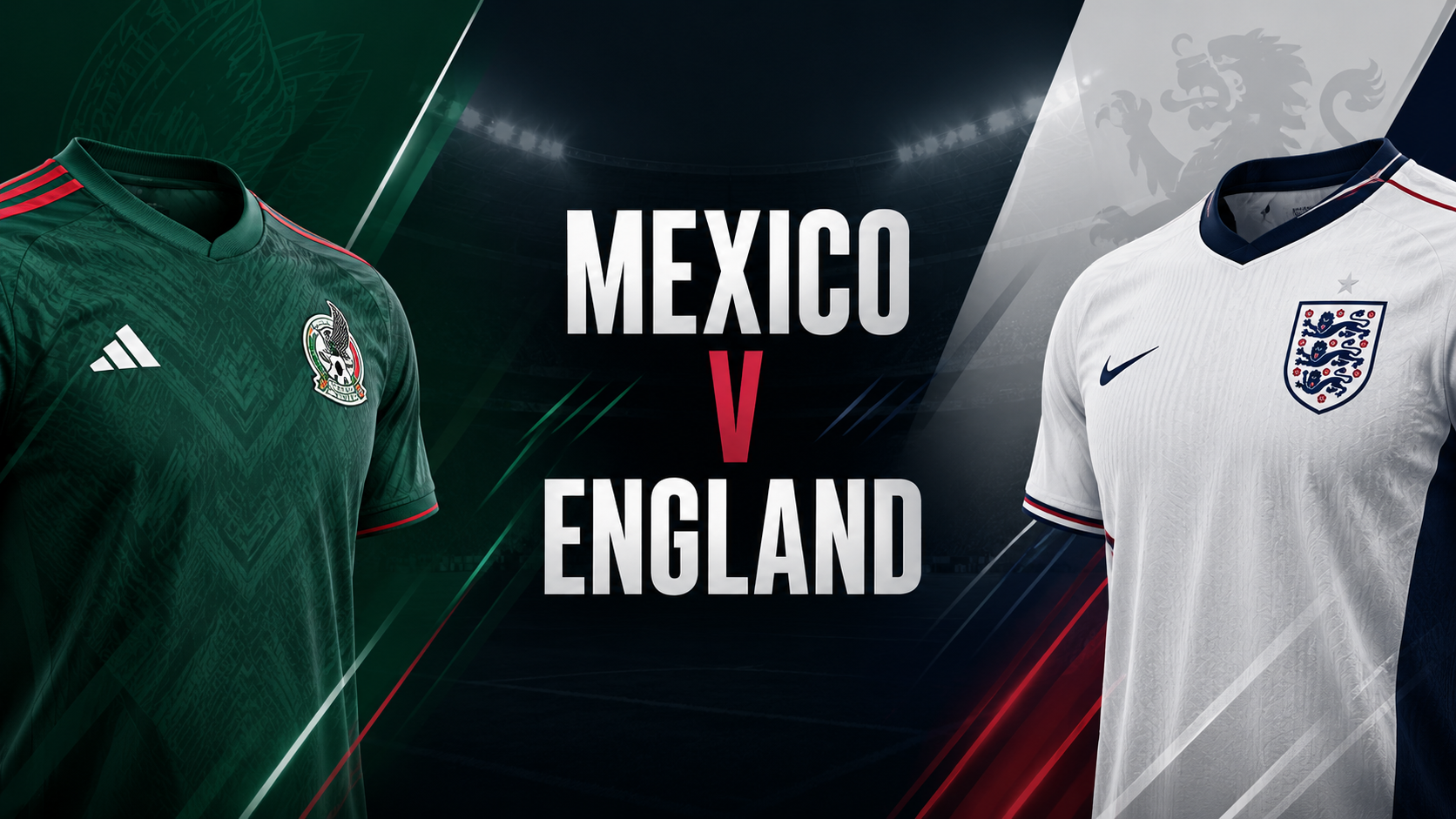
The romance of Sunday writes itself. Mexico and England have met at a World Cup once before, in the group stage of 1966, when England won 2 0 at Wembley and went on to lift the trophy for the only time. Sixty years later, to the summer, the fixture returns with the roles reversed: Mexico at home, England chasing history.
And the hosts are formidable there. Mexico have never lost a World Cup match at the Azteca, unbeaten across ten games, and have won all three of their matches there this tournament. Add altitude that visiting players cannot adapt to in four days, a crowd of nearly 90,000, and forty years of ghosts, and you have the most daunting assignment in this World Cup.
Kane, Tuchel and the chance to write a new chapter For English Football
This is where the myth making cuts both ways.
Harry Kane already owns every England goalscoring record worth owning. What he does not yet own is a defining World Cup moment on the game's grandest stage. His late double against DR Congo dragged England into this round. A decisive goal at the Azteca, in a knockout tie against the hosts, would place him in the same frame as the legends who made the stadium's name. Pelé did it there. Maradona did it there. The stage is the point.
Thomas Tuchel arrives with a puzzle at right back. Reece James, Tino Livramento and Jarell Quansah have all been lost to injury, leaving England improvising in a position that was once their deepest. Djed Spence, a left back by trade, filled in against DR Congo, and Declan Rice even finished that match there. If Tuchel solves that conundrum against the most settled home side in the tournament, in the hardest away ground in international football, his reputation as a knockout specialist gains a chapter nobody can argue with.
Why some grounds become myths
Stadiums become iconic for one of two reasons. Either the architecture astonishes, or the moments do. The Azteca has both, but it is the moments that made it immortal: Pelé's last dance, the Game of the Century, the Hand of God and the Goal of the Century within four minutes of each other.
That is the strange gift waiting for England on Sunday. The Azteca does not just host football matches. It mints legends and it buries reputations, sometimes in the same afternoon. Whatever happens at one o'clock on Monday morning, the old ground on the volcanic rock will add another line to the longest story in football.
Kick off is at 6pm in Mexico City. Set the alarm.