
The Football Grounds Bombed in the Second World War
When the bombs fell on Britain's cities, football grounds stood in the firing line. From Highbury to Bramall Lane, this is the fact checked story of the grounds that were hit, what really happened, and the myths that grew in the rubble.
The Battle of Britain, the Blitz and a Common Mix Up
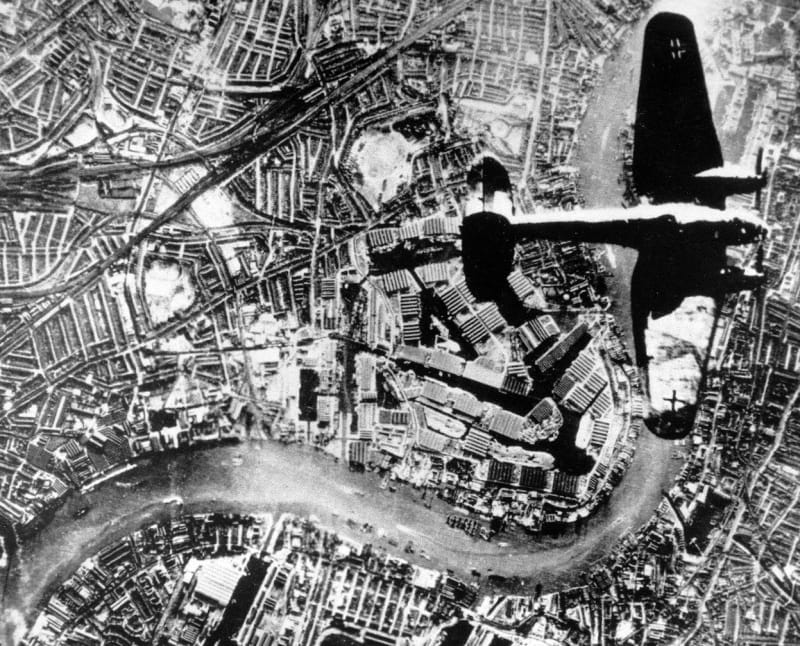
On the afternoon of 7 September 1940, Charlton played Millwall at The Valley in front of a wartime crowd. A few hours later the sky over the Thames filled with German bombers. It was the first night of the Blitz, and for the next five years English football grounds stood in the firing line alongside the docks, factories and terraced streets they were built among.
The stories from those years are remarkable. Some of them are also half remembered, muddled or simply wrong. This is the fact checked version: which grounds were hit, when, and what really happened.
The Battle of Britain, the Blitz and a Common Mix Up
First, a correction you will see repeated all over the internet. Football grounds were not, by and large, bombed during the Battle of Britain. The Battle of Britain was the air battle fought between July and October 1940, largely over the skies of southern England, as the RAF fought off the Luftwaffe's attempt to win control of the air.
The bombs that fell on football grounds came mostly during the Blitz, the sustained bombing of British cities that began on 7 September 1940 and ran until May 1941, and in the raids and flying bomb attacks that followed later in the war. The distinction matters. When a V1 flying bomb hit Upton Park in August 1944, the Battle of Britain had been over for nearly four years.
The two campaigns are connected. It was the RAF's victory in the Battle of Britain that pushed the Luftwaffe towards night bombing of cities, and it was that shift which put football grounds in harm's way. But if you want to get the history right, the grounds below were casualties of the Blitz and the long war that followed it, not of the Battle of Britain itself.
Highbury: The Ground That Went to War
Arsenal's Highbury did not wait to be attacked. It volunteered. From 1939 the stadium was handed over to the war effort and converted into an Air Raid Precautions centre, with shelters beneath the West Stand and a barrage balloon flying from the training pitch behind the Clock End. Arsenal spent the war playing their home fixtures at White Hart Lane, Tottenham returning a favour from the First World War, when Spurs had used Highbury.
The ground paid for its war service. In October 1940 a 1,000lb bomb fell on the southern side of the stadium, blowing tonnes of concrete over the Clock End terraces and destroying a hut in which RAF men were sitting. Two of them were killed. In 1941 incendiary devices started a fire that collapsed the roof of the North Bank, and much of the terracing at the southern end was wrecked too. The North Bank cover was not rebuilt until 1956, more than a decade after the war ended.
So the familiar claim that Highbury was bombed is true, but the detail matters. The North Bank was lost to fire following incendiaries, not flattened by high explosive, and the ground's most important wartime role was as a shelter and ARP stronghold for the people of Islington.
The Boleyn Ground: A Flying Bomb on the Pitch
West Ham's Upton Park suffered its most famous blow late in the war, and not from a bomber at all. In August 1944 a V1 flying bomb, one of the pilotless terror weapons launched against London in the final year of the conflict, came down on the south west corner of the pitch. The blast destroyed parts of the South Bank terrace and damaged the Main West Stand.
It is often lumped in with the Blitz, but the V1 attacks were a separate and later ordeal, arriving when many Londoners believed the worst was behind them. West Ham patched the ground up and carried on, as almost every bombed club did.
The Den: Bombed, Burned and Taken In by Rivals
Millwall's old Den on Cold Blow Lane sat close to the docks, one of the most heavily targeted areas in Britain, and its wartime story is the strangest of the lot. On 19 April 1943 a lone raider scored a direct hit on the North Terrace, blasting a crater in the ground and hurling a crowd barrier some 200 yards. The London Senior Cup Final was due to be played there that Easter Monday, and astonishingly the club cleared the wreckage and the match went ahead.
Then, with half an hour still to play, the main stand caught fire. The likely cause was not German ordnance but a discarded cigarette. The stand was gutted, and with no comprehensive war damage insurance Millwall were forced out of their own home. Here is the detail that often gets lost: the Den's main stand was destroyed by an accidental fire in the aftermath of the raid, not by the bombs themselves.
Millwall spent the following months as lodgers, playing home games at Selhurst Park, Upton Park and, in a fine piece of south London solidarity, at The Valley. They returned to a partially repaired Den in February 1944, while the ruins still smouldered around the edges of the pitch.
The Valley: In the Firing Line
You will sometimes read that Charlton were bombed out of The Valley. We could not verify that, and the record suggests something closer to the opposite. The Valley sat in one of the most heavily bombed corners of London, with the Woolwich Arsenal and the riverside factories close by, and the ground was constantly in the firing line. One wartime match between Charlton and Millwall was halted by an air raid warning with a minute left to play. When the all clear sounded, the players came back out and finished the final minute.
Rather than being forced into exile, The Valley became a refuge, taking in Millwall after The Den was wrecked in 1943. Charlton themselves had a fine wartime record, winning the War Cup South final at Wembley in 1944 in front of 85,000 people, with General Eisenhower as guest of honour.
Old Trafford: Eight Years in Exile
No English ground suffered more than Old Trafford. Manchester United's home sat inside Trafford Park, one of the most important industrial estates in the country and a priority target. The ground was damaged during the Manchester Christmas Blitz on 22 December 1940, and a second raid on 11 March 1941 destroyed much of the stand on the south side, reducing whole sections of the stadium to rubble. Aerial photographs taken in 1945 showed a ground in ruins, with little more than the players' tunnel surviving intact.
United moved their operations out and played their home matches at Maine Road, the ground of neighbours Manchester City. They did not return to Old Trafford until August 1949, more than eight years after the bombs fell. It remains the longest exile any major English club has endured through enemy action.
Bramall Lane: Eleven Bombs in One Night
When the Luftwaffe came for Sheffield's steelworks on 12 December 1940, the city centre took the worst of it, and Bramall Lane stood right in the path. Eleven bombs fell inside the boundaries of the ground that night, destroying the changing rooms, a large section of the John Street Stand and the roof of the Shoreham Street Kop, and leaving craters across the pitch. Around a third of the ground's seats were destroyed. Remarkably, nobody in the immediate vicinity was killed.
Sheffield United played their next home fixture, a derby against Sheffield Wednesday, at Hillsborough while the ground was made safe. The story did not quite end in 1940 either. In February 1985 an unexploded German bomb weighing around 2,200lb was unearthed in Lancing Road, behind the Kop, and United's match against Oldham was postponed while bomb disposal teams spent 36 hours making it safe. The war postponed a football match 40 years after it ended.
St Andrew's: Hit More Than Twenty Times
Birmingham City's ground has a strong claim to being the most bombed in England. St Andrew's stood close to the Birmingham Small Arms factory, a vital and heavily targeted site, and in 1941 the ground took at least 20 direct hits. The roof of the Kop was destroyed and the Railway End suffered serious structural damage, forcing the club away while repairs were carried out.
Then came one of the war's darkest comic footnotes. The Main Stand, which had been taken over by the National Fire Service, burned down in an accident involving a bucket of petrol. Having survived the Luftwaffe's best efforts, the stand was finished off by its own fire brigade. Birmingham returned to St Andrew's in 1943 once the aerial threat had faded.
The Dell: The Crater in the Penalty Area
Southampton was pounded throughout the autumn of 1940, its docks and the Supermarine Spitfire works making it an obvious target. On 30 November 1940 a bomb landed squarely in the Milton Road penalty area at The Dell, leaving an 18 foot crater and rupturing an underground culvert, which flooded the pitch. Saints finished the season on the road, even playing a War Cup tie at Fratton Park, the home of fierce rivals Portsmouth.
The ground's troubles were not over. In March 1941 munitions stored at The Dell exploded, starting a major fire that destroyed the West Stand. The club returned home in October 1941, and after the war The Dell went on to make happier history as the first English ground with permanent floodlights.
What the Rubble Left Behind
Every one of these grounds was repaired, rebuilt and refilled. The terraces that took the bombs went on to hold the great postwar crowds, the largest English football has ever seen. And here is a quieter thought: of the eight grounds in this piece, five are gone anyway. Highbury is flats, the Boleyn Ground is housing, the old Den closed in 1993, The Dell came down in 2001. What the Luftwaffe could not finish, time and redevelopment eventually did.
That is why these stories are worth getting right. The grounds themselves cannot correct the record any more. The fire that took the North Bank, the cigarette that finished The Den, the final minute played after the all clear at The Valley: the details are stranger and better than the myths.
Sponsored by The CobbleRose Shop
 Cobblerose